


image

Artificial Intelligence

The Simulation Of human Intelligence

image

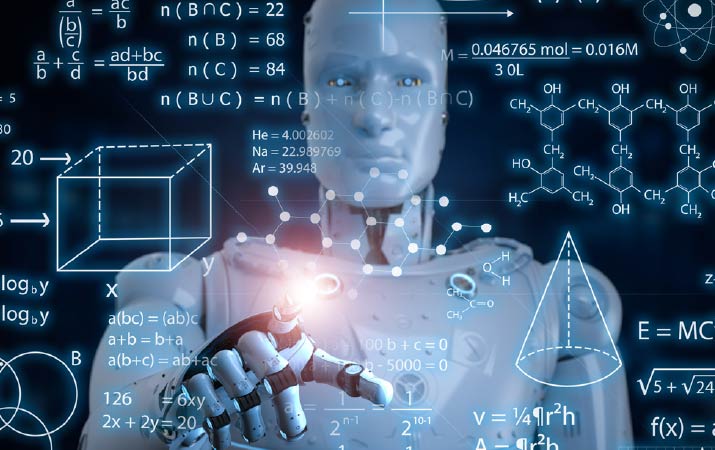
Artificial intelligence is the simulation of human intelligence processes by machines, especially computer systems. Specific applications of AI include expert systems, natural language processing, speech recognition and machine vision.As the hype around AI has accelerated, vendors have been scrambling to promote how their products and services use it. Often, what they refer to as AI is simply a component of the technology, such as machine learning. AI requires a foundation of specialized hardware and software for writing and training machine learning algorithms. No single programming language is synonymous with AI, but Python, R, Java, C++ and Julia have features popular with AI developers.
In general, AI systems work by ingesting large amounts of labeled training data, analyzing the data for correlations and patterns, and using these patterns to make predictions about future states. In this way, a chatbot that is fed examples of text can learn to generate lifelike exchanges with people, or an image recognition tool can learn to identify and describe objects in images by reviewing millions of examples. New, rapidly improving generative AI techniques can create realistic text, images, music and other media.

Photo of sunset
OpenAI

OpenAI is an American artificial intelligence research laboratory consisting of the non-profit OpenAI.

Photo of sunset
ChatGPT

ChatGPT is an artificial intelligence chatbot developed by OpenAI and released in November 2022.

Photo of sunset
CLipConnect

Introducing a neural network called CLIP which efficiently learns visual concepts from natural language supervision.

Photo of sunset
DigitalAI

AI-Powered DevOps platform secures and generates predictive insights across the software lifecycle to enhance business value.

image
Artificial intelligence systems are developed to perform tasks that previously required human intelligence. For quite some time now, science fiction works of art have been alluding to the fantastic and sometimes catastrophic effects of widespread use of artificial intelligence. In more ways than one, artificial intelligence has become omnipresent in our day to day lives. Some everyday tasks for AI systems include, language translation, visual aid, decision making, pattern recognition, etc. Today, artificial intelligence is the way to go, with applications such as self-driving cars, iPhone’s SIRI, etc. The widespread use of artificial intelligence systems is due to the benefits AI has to offer. These benefits include:

Latest Artificial Intelligence Technologies


1. Natural language generation

Machines process and communicate in a different way than the human brain. Natural language generation is a trendy technology that converts structured data into the native language. The machines are programmed with algorithms to convert the data into a desirable format for the user. Natural language is a subset of artificial intelligence that helps content developers to automate content and deliver in the desired format. The content developers can use the automated content to promote on various social media platforms, and other media platforms to reach the targeted audience. Human intervention will significantly reduce as data will be converted into desired formats. The data can be visualized in the form of charts, graphs, etc.

2. Speech recognition

Speech recognition is another important subset of artificial intelligence that converts human speech into a useful and understandable format by computers. Speech recognition is a bridge between human and computer interactions. The technology recognizes and converts human speech in several languages. Siri of iPhone is a classic example of speech recognition.

3. Virtual agents

Virtual agents have become valuable tools for instructional designers. A virtual agent is a computer application that interacts with humans. Web and mobile applications provide chatbots as their customer service agents to interact with humans to answer their queries. Google Assistant helps to organize meetings, and Alexia from Amazon helps to make your shopping easy. A virtual assistant also acts like a language assistant, which picks cues from your choice and preference. The IBM Watson understands the typical customer service queries which are asked in several ways. Virtual agents act as software-as-a-service too.

4. Machine learning

Machine learning is a division of artificial intelligence that empowers machines to make sense of data sets without being actually programmed. Machine learning technique helps businesses to make informed decisions with data analytics performed using algorithms and statistical models. Enterprises are investing heavily in machine learning to reap the benefits of its application in diverse domains. Healthcare and the medical profession need machine learning techniques to analyze patient data for the prediction of diseases and effective treatment. The banking and financial sector needs machine learning for customer data analysis to identify and suggest investment options to customers and for risk and fraud prevention. Retailers utilize machine learning for predicting changing customer preferences, and consumer behavior, by analyzing customer data.

5. AI-optimized hardware

Artificial intelligence software has a high demand in the business world. As the attention for the software increased, a need for the hardware that supports the software also arise. A conventional chip cannot support artificial intelligence models. A new generation of artificial intelligence chips is being developed for neural networks, deep learning, and computer vision. The AL hardware includes CPUs to handle scalable workloads, special purpose built-in silicon for neural networks, neuromorphic chips, etc. Organizations like Nvidia, and Qualcomm. AMD is creating chips that can perform complex AI calculations. Healthcare and automobile may be the industries that will benefit from these chips.